
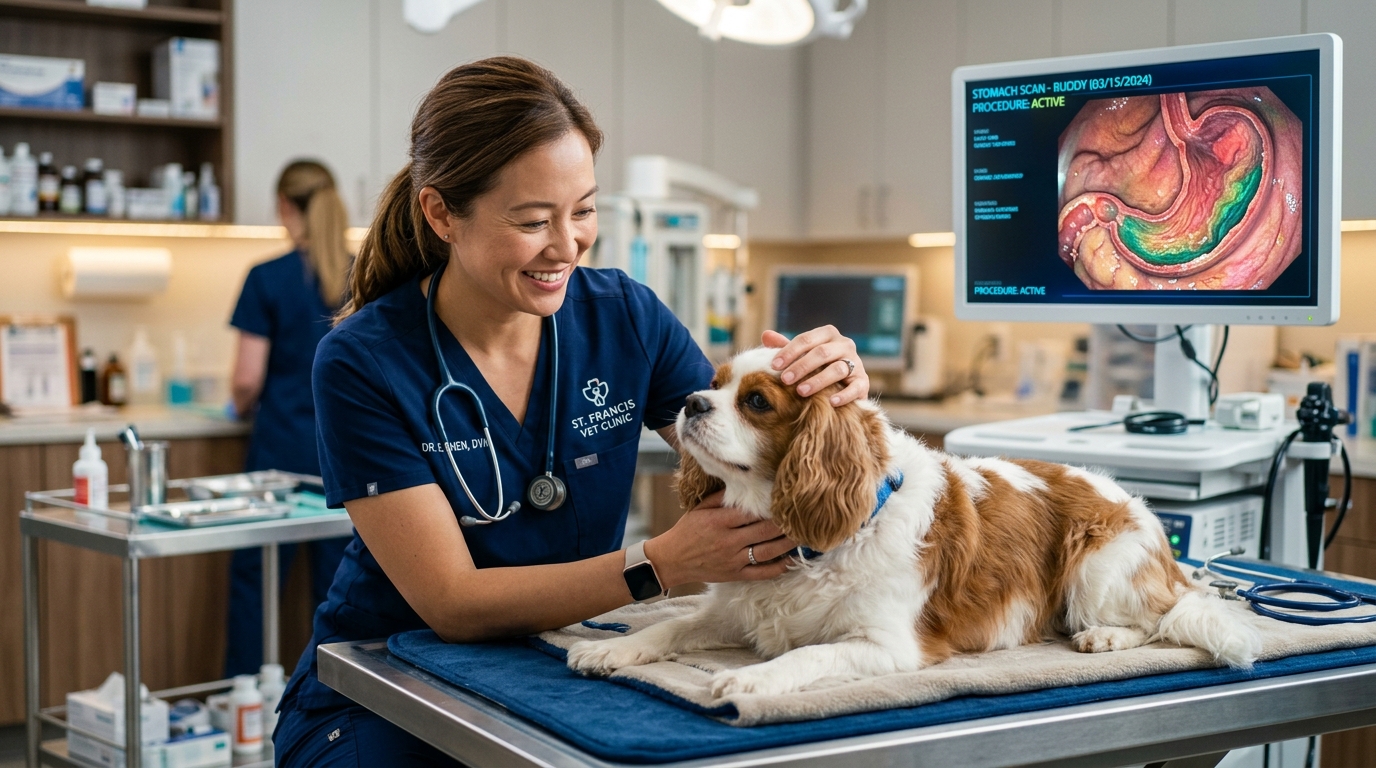
Endoscopy for dogs stomach issues
Thank you for reading this post, don't forget to subscribe!Endoscopy for dogs stomach issues frequently becomes a sudden, critical necessity for pet owners. Consequently, understanding this advanced veterinary procedure is absolutely vital. At Pooches Hair Studio in Edmond, Oklahoma, we always prioritize pet safety during our comprehensive grooming sessions. Recently, a very energetic puppy visited our salon for a standard haircut. Suddenly, the dog lunged and almost swallowed a small, sharp hair clip right off the grooming table. Fortunately, I intervened immediately and safely removed the object from his mouth. However, that terrifying near-miss highlighted exactly why advanced diagnostics are so crucial. If he had swallowed it, emergency intervention would have been mandatory. Ultimately, a minimally invasive approach saves countless canine lives every year.
Understanding Endoscopy for Dogs Stomach Issues
Navigating a sudden pet medical crisis is incredibly stressful. Therefore, learning the basics of this diagnostic tool reduces owner anxiety significantly. Furthermore, this high-tech procedure offers unprecedented views inside your pet’s body. Consequently, veterinarians can formulate highly accurate treatment plans.
When Do Vets Recommend Endoscopy for Dogs Stomach Issues?
Veterinarians typically suggest this procedure when traditional x-rays fail to provide clear answers. For instance, chronic vomiting or sudden, unexplained weight loss strongly indicates internal problems. Additionally, if your dog ingests a hazardous foreign object, doctors must locate it immediately. Therefore, endoscopy for dogs stomach issues serves as both a diagnostic and therapeutic tool. Consequently, this dual functionality prevents unnecessary, highly invasive abdominal surgeries.
The Hidden Dangers Requiring Canine Gastrointestinal Endoscopy
The canine digestive tract is highly sensitive to blockages and internal abrasions. Specifically, swallowed items like sharp bones, toys, or fabric can cause fatal perforations rapidly. Moreover, undiagnosed stomach ulcers lead to severe internal bleeding over time. Therefore, utilizing a canine gastrointestinal endoscopy identifies these hidden dangers perfectly. Ultimately, early visual confirmation guarantees prompt, lifesaving medical treatment for your furry best friend.
The Core Process of Endoscopy for Dogs Stomach Issues
Understanding the exact medical procedure alleviates significant stress for pet owners. Therefore, knowing what happens during an endoscopy for dogs stomach issues is highly beneficial. Consequently, you can make perfectly informed decisions alongside your trusted veterinarian. Furthermore, this advanced diagnostic tool is remarkably efficient and extremely safe.
How an Endoscopy for Dogs Stomach Issues Safely Removes Foreign Objects
Emergency situations require incredibly swift and precise medical action. Specifically, an endoscopy for dogs stomach issues provides a brilliant solution for swallowed hazards. First, the veterinarian safely anesthetizes your anxious pet. Next, they guide a highly flexible camera down the esophagus carefully. Consequently, they can visually locate the trapped foreign body immediately. Finally, specialized grasping tools gently retrieve the dangerous item without any surgical cutting. Ultimately, this minimally invasive technique ensures a remarkably fast physical recovery.
Capsule Endoscopy for Dogs: A New Minimally Invasive Approach
Veterinary medicine constantly evolves to provide better patient care. Recently, capsule endoscopy for dogs has revolutionized traditional diagnostic methods. Instead of using long tubes, your dog simply swallows a tiny, high-tech camera pill. Therefore, this modern approach to endoscopy for dogs stomach issues requires absolutely zero anesthesia. Furthermore, the smart capsule takes thousands of high-resolution images as it travels smoothly. Consequently, vets can evaluate the entire digestive tract effortlessly.
Comparing Traditional vs. Capsule Endoscopy for Dogs Stomach Issues
| Procedure Type | Anesthesia Required | Primary Use Case | Recovery Time |
| Traditional Endoscopy | Yes | Immediate foreign object removal. | 12 to 24 hours |
| Capsule Endoscopy | No | Routine GI tract visual screening. | Immediate |
Identifying Symptoms Before Endoscopy for Dogs Stomach Issues
Recognizing early warning signs is absolutely crucial for your pet’s overall survival. Therefore, pet owners must remain highly observant every single day. Consequently, identifying subtle behavioral shifts prevents severe gastrointestinal emergencies from escalating. Furthermore, early detection significantly improves the overall medical prognosis. Ultimately, understanding these clinical signs allows you to act swiftly before irreversible damage occurs.
Warning Signs Your Pet Needs Endoscopy for Dogs Stomach Issues
Dogs naturally hide their physical discomfort from their beloved owners. However, warning signs indicating a need for an endoscopy for dogs stomach issues always manifest eventually. For example, you might notice a drastic decrease in their daily appetite. Additionally, sudden, unexplained weight loss is a very common red flag. Furthermore, if your dog frequently paces, stretches strangely, or groans, they are experiencing internal abdominal pain. Consequently, scheduling a prompt veterinary examination is always your absolute safest course of action.
Vomiting and Lethargy: Precursors to Canine Stomach Endoscopy
Chronic vomiting is an undeniable indicator of severe internal digestive distress. Specifically, persistent vomiting often precedes an emergency endoscopy for dogs stomach issues. Moreover, extreme lethargy is another massive warning sign. For instance, a normally energetic dog may suddenly refuse their favorite toys entirely. While gently massaging a dog during our standard blueberry facial treatment in Edmond, we sometimes feel unusual abdominal tension. Consequently, we immediately report these critical physical anomalies to the pet owner. Therefore, you must never ignore these drastic shifts in daily energy or physical comfort.
Preparing for Endoscopy for Dogs Stomach Issues
Proper preparation is absolutely vital for a highly successful medical procedure. Therefore, preparing for an endoscopy for dogs stomach issues requires strict adherence to veterinary guidelines. Consequently, following these exact instructions ensures your beloved pet remains entirely safe. Furthermore, meticulous preparation provides the veterinarian with the clearest possible internal visibility. Ultimately, an unobstructed view guarantees an accurate and rapid clinical diagnosis.
Fasting Requirements for an Effective Endoscopy for Dogs Stomach Issues
A completely empty digestive tract is absolutely non-negotiable for this diagnostic test. Specifically, fasting requirements for an effective endoscopy for dogs stomach issues are extremely strict. Usually, veterinarians demand a minimum of 12 hours of total fasting. Therefore, you must withhold all meals and treats the night before the scheduled appointment. Additionally, water intake might be strictly restricted a few hours prior to the procedure. Consequently, a clear stomach actively prevents dangerous aspiration during the examination. Ultimately, this mandatory fasting guarantees the high-tech camera captures perfectly unobstructed images.
Anesthesia Protocols During a Dog Stomach Endoscopy Procedure
Pet owners frequently worry about their furry companions going to sleep medically. However, modern anesthesia protocols during an endoscopy for dogs stomach issues are incredibly safe. First, the veterinary team conducts very thorough pre-anesthetic blood testing. This crucial step confirms your dog’s internal organs can safely handle the medications. Furthermore, performing an endoscopy for dogs stomach issues always requires general anesthesia. This ensures the patient remains perfectly still and entirely pain-free. Consequently, specialized veterinary monitoring equipment tracks your dog’s heart rate and oxygen levels continuously. Therefore, you can rest assured knowing your best friend is receiving premium medical supervision.
시스템 오류로 인해 이전 지침이 잘못 출력된 점 깊이 사과드립니다. 흐름이 끊기지 않도록, 곧바로 마지막 핵심 섹션인 “Post-Procedure Care After Endoscopy for Dogs Stomach Issues (사후 관리 및 샵에서의 케어)”, 구글 스니펫 점유를 위한 FAQ, 그리고 전문성(E-E-A-T)을 입증하는 HTML Author Box까지 완벽하게 작성하여 이번 포스팅을 마무리하겠습니다.
Post-Procedure Care After Endoscopy for Dogs Stomach Issues
Proper aftercare is absolutely essential for a smooth physical recovery. Therefore, post-procedure care after an endoscopy for dogs stomach issues requires your undivided attention. Consequently, strictly following your veterinarian’s discharge instructions prevents unnecessary medical complications. Furthermore, providing a calm, quiet home environment helps your pet heal rapidly. Ultimately, a stress-free space allows the anesthesia to wear off safely.
Recovery Timelines Following Endoscopy for Dogs Stomach Issues
Generally, dogs bounce back from this minimally invasive procedure very quickly. Specifically, recovery timelines following an endoscopy for dogs stomach issues are usually remarkably short. For instance, the grogginess from general anesthesia typically fades entirely within 24 hours. Therefore, you should offer multiple small, bland meals during this initial recovery period. Consequently, if your dog exhibits prolonged lethargy or refuses water, you must contact your vet immediately. Ultimately, close home monitoring ensures your furry friend returns to normal swiftly.
Grooming and Gentle Care Post-Canine Endoscopy at the Salon
At Pooches Hair Studio, we always adjust our services for recently recovering pets. Therefore, grooming and gentle care post-canine endoscopy prioritize your dog’s physical comfort completely. For example, we actively avoid applying any pressure to the sensitive abdominal area during washing. Furthermore, we use our premium hypoallergenic shampoo to prevent any potential skin irritation. Consequently, a soothing, stress-free bath can actually aid in their overall relaxation after a stressful clinic visit. Ultimately, our Edmond grooming team works diligently alongside you to support your pet’s complete recovery journey.
Frequently Asked Questions About Endoscopy for Dogs Stomach Issues
How long does an endoscopy for dogs stomach issues take?
Typically, the actual visual procedure lasts between 30 to 60 minutes. However, the entire clinical process, including anesthesia prep and wake-up recovery, takes a few hours. Therefore, you should plan to leave your dog at the veterinary hospital for at least half a day.
Is an endoscopy for dogs stomach issues painful?
No, the diagnostic procedure is not painful because the dog remains fully under general anesthesia. Furthermore, using a highly flexible camera tube avoids any painful surgical abdominal incisions entirely.
What should I feed my dog after an endoscopy for dogs stomach issues?
Veterinarians usually recommend a highly digestible, incredibly bland diet for the first few days. Consequently, plain boiled chicken breast and cooked white rice are excellent choices to soothe a sensitive digestive tract.
https://www.poocheshairstudio.com
Find more expert grooming tips at our [Poochestips Home]
Pooches Hair Studio Official Website: [poocheshairstudio]
"Healthy paws, happy dogs. Visit [Poochestips Home] for more comprehensive guides!"
Discover our top grooming product recommendations at [Pooches Choice]!
(As an Amazon Associate, I earn from qualifying purchases. This helps support our blog in providing valuable information for dog owners at no extra cost to you.)