
7 Critical Dog Dehydration Symptoms Senior Dogs Must Never Ignore: A Groomer’s Perspective
Dog dehydration symptoms senior dogs often manifest in subtle ways that many pet parents overlook until a crisis occurs. Consequently, maintaining optimal hydration is not merely about quenching thirst; it is a fundamental requirement for sustaining organ function and skin integrity in aging canines. As a professional groomer, I have seen firsthand how water intake directly impacts a dog’s external vitality.
Thank you for reading this post, don't forget to subscribe!The Hidden Warning Signs: Why Senior Dogs Lose Hydration Faster
Senior dogs are significantly more susceptible to fluid imbalance than their younger counterparts. Furthermore, their thirst drive often diminishes with age, leading to a dangerous cycle of chronic dehydration that affects the kidneys and heart. Therefore, understanding the biological shift in aging pets is the first step in proactive care.
Metabolic Changes and Aging Organs
As dogs age, their bodies undergo a physiological transformation that alters how they process fluids. Specifically, the kidneys may become less efficient at concentrating urine, which means they lose more water even when they aren’t drinking enough. Additionally, senior dogs often suffer from underlying conditions like cognitive dysfunction, which might cause them to simply “forget” to visit their water bowl. Because of these factors, the margin for error regarding hydration becomes razor-thin as a dog enters its golden years.
My Grooming Table Revelation: The “Skin Turgor” Test
Today, I had a revealing experience while grooming a regular client—a sweet, senior Maltese. As I began my initial assessment, I noticed something concerning: her skin felt like parchment paper, brittle and devoid of its usual bounce. When I performed a Skin Turgor Test (gently pinching the skin between the shoulder blades), the skin did not snap back instantly. Instead, it remained in a “tented” position for several seconds.
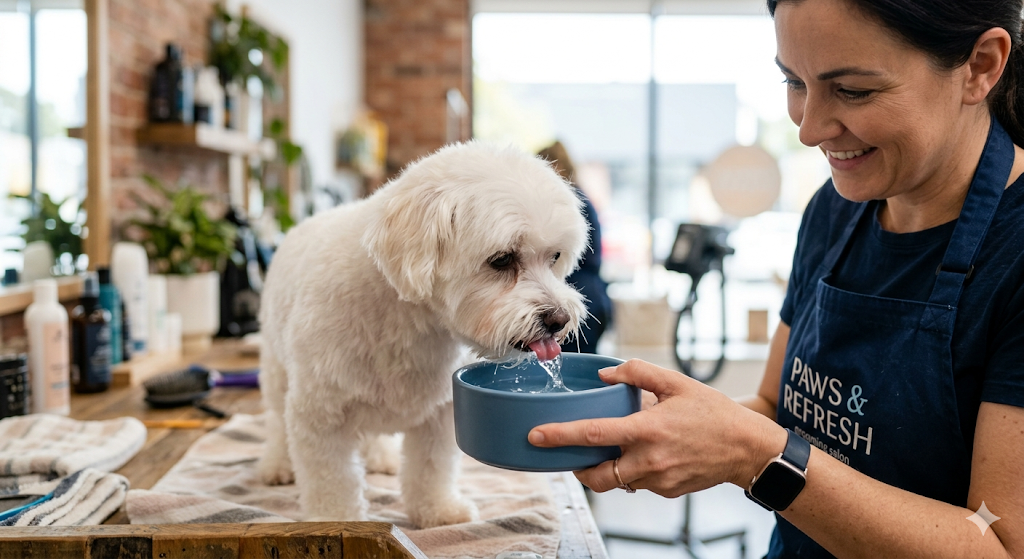
I immediately asked the owner about the dog’s drinking habits. “She barely touches her bowl lately,” the owner admitted. This interaction highlighted a critical truth: the grooming table is often the first place where dog dehydration symptoms senior dogs become visible. After the session, I offered the Maltese a small bowl of filtered water infused with a drop of low-sodium chicken broth. Watching her drink with desperate intensity was a somber reminder of how easily dehydration hides under a coat of fur.
Expert Note: If your senior dog’s skin takes more than 2 seconds to return to its original position during a tent test, they are likely at least 5% dehydrated. At this stage, clinical intervention or immediate oral rehydration is necessary.
Beyond Thirst: 5 Physical Dog Dehydration Symptoms Senior Dogs Exhibit
Recognizing dog dehydration symptoms senior dogs display requires more than just checking an empty water bowl. In fact, by the time a dog shows obvious thirst, they may already be experiencing moderate dehydration. Therefore, pet owners must learn to read the physical “red flags” that the body sends out when fluids are low.
Sticky Gums and Sunken Eyes
One of the most reliable indicators of a dog’s hydration status is the moisture level of their mucous membranes. Healthy dogs have gums that are slick and wet to the touch. Conversely, if you lift your senior dog’s lip and the gums feel “tacky” or sticky, it is a clear sign that the body is conserving moisture. Furthermore, in advanced stages, you may notice sunken eyes. This occurs because the fluid pads behind the eyeballs begin to shrink, causing the eyes to lose their brightness and recede into the sockets.
Lethargy and Sudden Loss of Appetite
Dehydration leads to a decrease in blood volume, which forces the heart to work harder to pump oxygen to the brain and muscles. Consequently, a dehydrated senior dog will often appear unusually tired or reluctant to go for their usual walk. Additionally, a sudden loss of appetite is common. Digestion requires significant water intake for enzyme production and nutrient transport. Without adequate hydration, the digestive system slows down, making the dog feel nauseous or uninterested in food.
The Scientific Connection Between Hydration and Skin Elasticity
As I observed with the Maltese in my shop today, the skin is often the most visible victim of dehydration. Scientifically, skin is the largest organ of the body and serves as a reservoir for fluids. When a dog is dehydrated, the body prioritizes internal organs like the heart and liver, pulling moisture away from the peripheral tissues like the skin.
How Dehydration Destroys the Protective Skin Barrier
Water is essential for maintaining the lipid barrier of the skin. When this barrier fails due to lack of moisture, the skin becomes prone to micro-cracks, redness, and secondary infections. In senior dogs, whose cell turnover rate is already slower, this lack of hydration leads to a “crepy” texture and a loss of collagen support. Consequently, the skin loses its ability to protect the dog from environmental allergens and bacteria, which I often see as “hot spots” or flaky dandruff during grooming sessions.
Comparison: Hydrated vs. Dehydrated Senior Dog Skin
| Feature | Hydrated Senior Dog | Dehydrated Senior Dog |
| Skin Turgor | Snaps back instantly (< 1s) | Remains “tented” (> 2-3s) |
| Coat Texture | Lustrous and soft | Brittle, dry, and dull |
| Dander Level | Minimal | High (flaky skin) |
| Elasticity | High (firm to touch) | Low (thin, parchment-like) |
| Gum Moisture | Wet and slippery | Tacky, dry, or pale |
Practical Solutions to Increase Water Intake for Stubborn Seniors
Encouraging a senior dog to drink more can be challenging, especially when their natural thirst instinct has dulled. However, as a professional groomer, I always advise my clients that hydration is a multi-faceted approach. You don’t just have to rely on the water bowl; you can “eat” your water too.
Switching to Wet Food and Hydration Boosters
One of the most effective ways to combat dog dehydration symptoms senior dogs experience is to alter their diet. Dry kibble typically contains only 10% moisture, whereas wet or canned food contains upwards of 75% to 80%. Furthermore, adding “toppers” like goat milk or bone broth (ensure it is onion and garlic-free) can make the water much more enticing. Consequently, the dog receives a significant portion of their daily fluid requirements during mealtime without even realizing it.
The Role of Electrolytes and Flavor-Infused Water
Sometimes, plain water is simply unappealing to an aging dog. In these cases, flavor-infused water can be a game-changer. Adding a splash of tuna juice or low-sodium chicken broth to their bowl often encourages immediate lapping. Additionally, for dogs showing signs of mild heat exhaustion or post-grooming fatigue, pet-specific electrolyte solutions can help restore mineral balance. These solutions help the body retain water more effectively than plain H2O alone.
Real-world Case Study: Transforming Brittle Skin into Healthy Glow
Let’s return to the Maltese I mentioned earlier. After our session, I sat down with her owner and created a “Hydration Roadmap.”
- The Intervention: We swapped her dinner for a high-quality wet food mixed with extra warm water.
- The Environment: The owner placed three separate water bowls around the house—one near her favorite sleeping spot, one in the kitchen, and one upstairs—to reduce the effort required for the senior dog to reach them.
- The Result: Two weeks later, she returned for a bath. The difference was staggering. Her skin felt supple, the “tented” skin test lasted less than a second, and her coat had regained a natural, healthy luster.
This case proves that while aging is inevitable, the physical decline associated with dehydration is often preventable with small, consistent changes.
FAQ: Frequently Asked Questions About Senior Dog Hydration
Q1: Can I give my senior dog tap water? Yes, tap water is generally safe. However, ensure it is fresh. If your pipes are old, let the water run for a minute to clear out any stagnant minerals before filling the bowl.
Q2: How much water should my dog drink daily? A general rule of thumb is 60-65ml of water per 1kg of body weight. For a 5kg dog, that’s roughly 300-325ml per day.
Q3: My dog drinks a lot but still seems dehydrated. Why? Excessive thirst (polydipsia) combined with dehydration can be a sign of underlying issues like diabetes, kidney disease, or Cushing’s syndrome. Therefore, consult a vet immediately if you notice this pattern.
Q4: Is it okay to give dogs human electrolyte drinks? Avoid most human drinks as they contain high levels of sugar or artificial sweeteners like Xylitol, which is toxic to dogs. Always use products formulated specifically for pets.
https://www.poocheshairstudio.com
Find more expert grooming tips at our [Poochestips Home]
Pooches Hair Studio Official Website: [poocheshairstudio]
"Healthy paws, happy dogs. Visit [Poochestips Home] for more comprehensive guides!"
Discover our top grooming product recommendations at [Pooches Choice]!
(As an Amazon Associate, I earn from qualifying purchases. This helps support our blog in providing valuable information for dog owners at no extra cost to you.)