
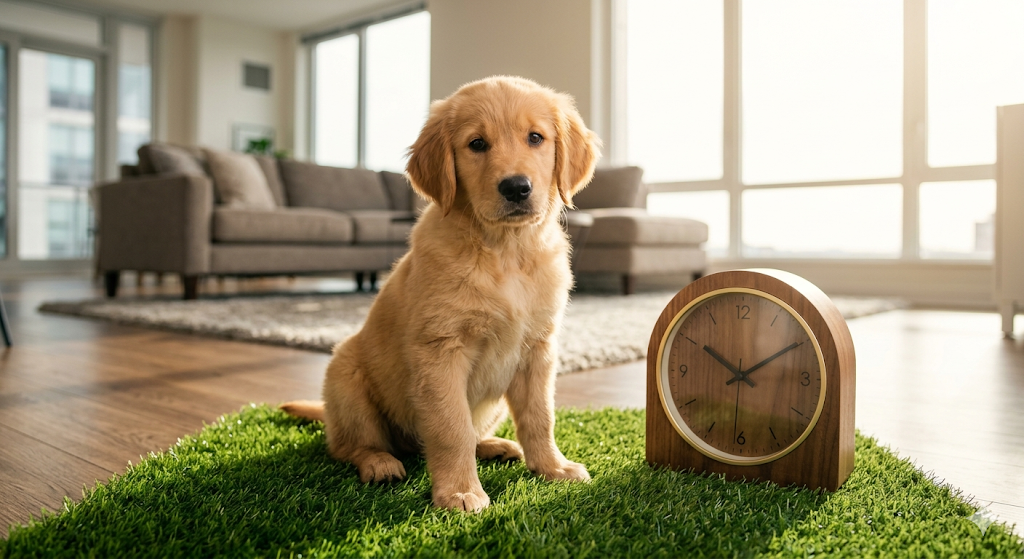
Ultimate Puppy Potty Training Schedule: 5 Proven Steps to a Spotless Home
Establishing a consistent Puppy Potty Training Schedule is the single most important step in creating a harmonious life with your new canine companion. While many new owners view housebreaking as a chore, it is actually a profound form of communication. From my years of professional experience in high-end grooming and care, I have observed that success doesn’t come from force, but from understanding the biological and psychological rhythm of your pet. A human bathroom is designed for humans; a dog’s “bathroom” is a complex choice based on instinct, scent, and safety.
Thank you for reading this post, don't forget to subscribe!Understanding the Puppy Potty Training Schedule: Why Timing is Everything
Timing is the heartbeat of effective training. Many owners feel frustrated when accidents happen, but science tells us that a puppy’s physical limitations are often the culprit rather than “bad behavior.” During the early stages, specifically between 3 to 14 weeks, puppies go through a “Socialization Period.” This is a golden window where their brains are like sponges, making it the perfect time to anchor a Puppy Potty Training Schedule.
The Critical Socialization Window (3-14 Weeks)
In this phase, puppies learn how to interact with their environment. If you introduce the right surfaces and routines now, they will naturally seek those spots for the rest of their lives. Professionally, we call this “substrate preference.” Furthermore, missing this window doesn’t mean failure, but it does mean you will have to work twice as hard to undo ingrained habits later.
How Long Can They Actually Hold It? (The $n+1$ Rule)
One of the most common mistakes is expecting too much from a tiny bladder. A reliable biological formula to follow is the $n+1$ rule: a puppy can typically hold their waste for their age in months plus one hour. For example, a 3-month-old puppy can hold it for approximately $3 + 1 = 4$ hours. Consequently, an 8-month-old might manage 9 hours. However, once a dog reaches adulthood (around 12 months), they can physically hold it for up to 13 hours, though this is not recommended for their long-term kidney health.
| Puppy Age | Max Holding Time (approx.) | Recommended Frequency |
| 2 Months | 3 Hours | Every 2 hours |
| 3 Months | 4 Hours | Every 3 hours |
| 4 Months | 5 Hours | Every 4 hours |
| 6 Months+ | 7-8 Hours | 3-4 times a day |
Strategic Placement: Creating the Perfect Indoor Potty Sanctuary
A successful Puppy Potty Training Schedule depends heavily on where the “target” is located. In the wild, canines are instinctively programmed to keep their dens clean. This “denning instinct” means they will naturally avoid relieving themselves where they sleep or eat. Consequently, if you place a potty pad too close to their bed, you are forcing the dog to fight its own nature, which leads to confusion and anxiety.
Why Proximity to the Sleeping Area Matters
To align with their natural biology, the designated potty area should be as far from the sleeping quarters as your living space allows. When I consult with clients at Pooches Tips, I often see owners placing pads in high-traffic hallways or right next to crates. This is a mistake. A dog needs a sense of privacy and distance to feel secure. By respecting this spatial boundary, you reinforce the Puppy Potty Training Schedule by making the choice easy for them.
Using Scent and Texture to Guide Your Puppy
Dogs are tactile and olfactory learners. They recognize a “bathroom” by the way it feels under their paws and the way it smells. This is why many dogs gravitate toward carpets—the absorbent, soft texture mimics the soil or grass they would use in nature. Furthermore, you can use “scent marking” to your advantage. Placing a new pad underneath a slightly used one (that contains a hint of their scent) acts as a biological signpost. It tells the puppy, “This is the spot.”
Pro Tip: If your puppy is struggling, try using high-quality pads with built-in attractants or a drop of their own urine on a fresh pad. This sensory cue is often the “lightbulb moment” for a young dog.
Positive Reinforcement: The Professional Groomer’s Secret to Success
In the realm of a Puppy Potty Training Schedule, the carrot is infinitely more powerful than the stick. Positive reinforcement is not just about giving treats; it is about precise timing and emotional connection. As a professional, I always emphasize that dogs live in the “now.” Therefore, your feedback must be instantaneous to build a strong neural pathway between the action and the reward.
The 3-Second Rule for Praise and Treats
To successfully anchor a Puppy Potty Training Schedule, you must catch your puppy in the act. The “3-Second Rule” is critical: you have a tiny window immediately after they finish to offer praise or a high-value treat. If you wait even a minute, the puppy will not associate the reward with the potty action. Instead, they might think they are being rewarded for simply sitting or looking at you. Small kibbles or tiny pieces of healthy treats work best to keep them focused without overfeeding.
Why Scolding is Your Training’s Worst Enemy
One of the biggest myths in dog training is that you should scold a dog after an accident. If you find a mess and yell at your dog, they cannot connect your anger to an event that happened in the past. Consequently, scolding only teaches the dog to fear you. They may begin to hide their “business” behind sofas or under beds to avoid your reaction. This creates a “closet pooper” habit that is incredibly difficult to break. Instead of punishing the mistake, focus on cleaning the area with an enzymatic cleaner to remove the scent and redouble your efforts on the schedule.
Troubleshooting Regressions: When a Trained Dog Starts Having Accidents
Even with a perfect Puppy Potty Training Schedule, you may encounter a “regression” phase. It is heart-wrenching when a previously house-trained dog suddenly starts having accidents indoors. However, from a behavioral standpoint, this is rarely about “forgetting” the rules. Instead, it is usually a physical or emotional cry for help. Understanding these triggers is essential for maintaining a stress-free home.
Identifying Separation Anxiety and Emotional Stress
Dogs are highly empathetic creatures that mirror their owner’s emotions. If there has been a change in the household—such as moving to a new home, a change in your work hours, or even a new family member—your dog’s Puppy Potty Training Schedule can be thrown into chaos. Separation anxiety often manifests as “inappropriate elimination.” In these cases, the dog isn’t being spiteful; they are literally losing control of their bladder due to a cortisol spike. Addressing the underlying anxiety through desensitization is the only way to fix the potty issue.
Health Over Habit: When to Consult a Vet
If a mature dog suddenly breaks their routine, the first step should always be a medical check-up. Conditions such as Urinary Tract Infections (UTIs), bladder stones, or even diabetes can make it physically impossible for a dog to wait until their next scheduled walk. Furthermore, as a caregiver, observing the frequency and consistency of these accidents provides vital data for your veterinarian. Never assume it’s a behavioral “lapse” until you have ruled out physical pain or illness.
Adapting the Schedule for Senior Dogs: Beyond the Puppy Phase
As your companion enters their golden years (typically around age 7), the Puppy Potty Training Schedule must evolve into a “Senior Care Routine.” Aging brings significant physiological changes, including the weakening of the sphincter muscles and the potential onset of cognitive dysfunction. Understanding that your senior dog is not “misbehaving” but rather “struggling” is the key to maintaining their dignity and your bond.
Managing Muscle Weakness and Incontinence
Just as humans age, dogs experience a decline in muscle tone. This often results in urinary incontinence, where the dog may leak small amounts of urine while sleeping or resting. Consequently, a dog that could once wait 10 hours may now only manage 4 or 5. Increasing the frequency of potty breaks is the most effective way to manage this. Furthermore, professional care products like Hyponic or iGroom can be used to keep their coat clean and prevent “urine scald” on their skin, ensuring their comfort remains a priority.
The “Artificial Grass” Solution for Aging Joints
For senior dogs who have spent their lives preferring the outdoors, the walk to the backyard can become painful due to arthritis or hip dysplasia. To assist them, consider bringing the “outdoors” inside. Placing artificial grass pads in a quiet corner of the home can provide the familiar tactile sensation they crave without the painful trek down stairs. This small act of empathy helps a senior dog maintain their bathroom habits without physical strain.
https://www.poocheshairstudio.com
Find more expert grooming tips at our [Poochestips Home]
Pooches Hair Studio Official Website: [poocheshairstudio]
"Healthy paws, happy dogs. Visit [Poochestips Home] for more comprehensive guides!"
Discover our top grooming product recommendations at [Pooches Choice]!
(As an Amazon Associate, I earn from qualifying purchases. This helps support our blog in providing valuable information for dog owners at no extra cost to you.)