
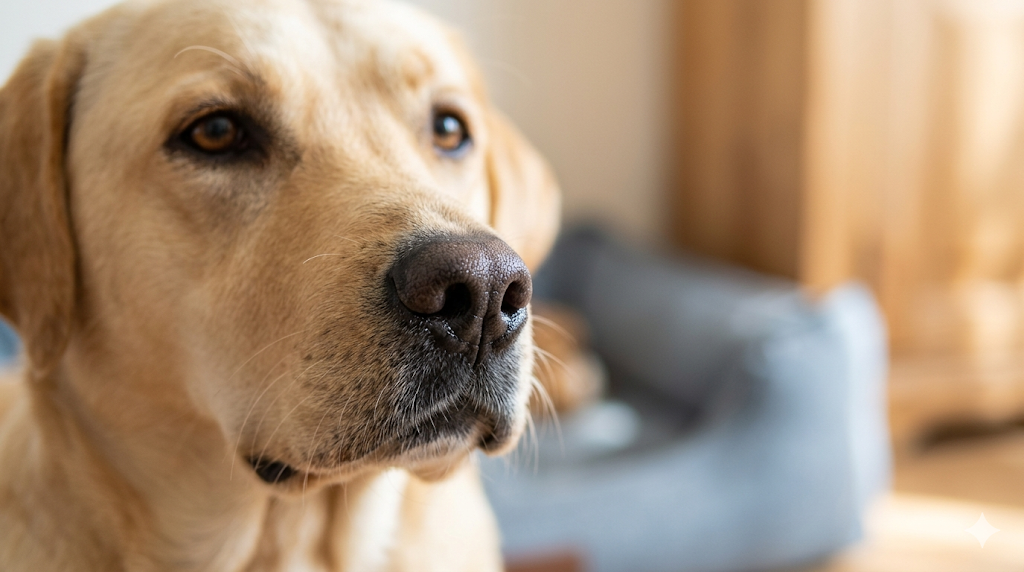
Dog Dry Nose When to Worry? 7 Critical Signs Every Owner Must Know
Dog dry nose when to worry is a question that frantically haunts many pet parents, often leading to unnecessary late-night anxiety and frantic calls to our salon. We have all heard the ancient old wives’ tale: “A healthy dog must have an ice-cold, wet nose.” However, as a professional groomer who has safely handled thousands of pups at Pooches Hair Studio, I can confidently tell you that this is simply not a universal truth.
Thank you for reading this post, don't forget to subscribe!While a moist snout absolutely helps dogs regulate body temperature and track complex scents, a temporarily dry nose can be perfectly normal depending on the immediate environment, the time of day, or even your dog’s recent nap schedule. However, knowing the subtle, critical difference between a harmless “nap-dry” nose and a severe medical red flag is absolutely crucial for your dog’s long-term health. Consequently, this comprehensive guide will completely transform how you monitor your furry best friend.
Why a Dry Nose is Normal After Sleeping (The 10-Minute Rule)
One of the most common reasons panicked owners ask about dog dry nose when to worry is seeing their pup wake up with a parched, physically warm snout. In our bustling grooming salon, I frequently see dogs coming out of their cozy resting crates after a short post-bath nap with noses that look surprisingly dry and dull. Fortunately, this is almost always a harmless physiological fluke rather than a terrifying health crisis.
The Science of the “Wake-up Lick”
Dogs actively maintain their vital nasal moisture primarily through constant tongue licking and specialized internal sweat glands. When a dog is fully awake, they are perpetually “resetting” their nose’s moisture levels to drastically enhance their olfactory (smelling) capabilities. However, when they fall asleep, this constant licking completely stops. Furthermore, the tear ducts that normally provide internal moisture to the nasal canal become significantly less active during deep REM sleep. As a result, you witness a temporary evaporation of the surface moisture.
Why Sleeping Dogs Can’t Maintain Nasal Moisture
If your dog has been napping directly near a forced-air heater, on a fluffy thermal bed, or in a room with exceptionally low humidity, their nose will naturally lose its dew-like coating. Therefore, this is exactly where my salon-tested “10-Minute Rule” comes in. If your dog wakes up with a dry nose, do not rush to the emergency vet immediately. Instead, quietly observe them for 10 to 15 minutes. Once they are fully awake and walking around, they will naturally begin licking their nose, and the moisture should return seamlessly. If the nose remains dry, deeply cracked, or flaky long after they have started their daily activities, that is when we firmly move into professional veterinary assessment territory.
When a Dry Nose Indicates Severe Canine Dehydration
While a simple nap-induced dry snout is completely harmless, a persistent dog dry nose when to worry scenario very often links back to severe systemic dehydration. As a master groomer, I meticulously check a dog’s hydration levels before initiating any high-energy grooming session. Specifically, the intense heat and airflow from high-velocity dryers can rapidly exacerbate an existing fluid deficit, leading to heatstroke. If your dog’s nose is dry and they seem noticeably less bouncy than usual, it is time to perform a quick, professional “home physical.”
Checking Gum Elasticity and Capillary Refill Time (CRT)
The nose is certainly not the only visible indicator of canine hydration. To get a perfectly clear picture, you must check the dog’s mucous membranes. Gently lift your dog’s upper lip to expose the gum line. Their gums should be vibrant pink and highly slippery to the touch. If the gums feel tacky, sticky, or bone-dry, your dog is undoubtedly dehydrated.
Another professional trick we use on the grooming table is the Capillary Refill Test (CRT). Press your index finger firmly against the pink gum until the tissue turns temporarily white, then quickly let go. In a healthy, fully hydrated dog, the rich pink color should return in less than two seconds. However, if it takes noticeably longer, their blood circulation is sluggish due to a dangerously low fluid volume.
Why Excessive Thirst and Dry Snouts are a Red Flag
If you notice your dog is constantly hovering over the water bowl but their nose bizarrely remains parched, this is a massive clinical “Red Flag.” Persistent external dryness combined with polydipsia (excessive, unquenchable thirst) can point directly to severe underlying issues like kidney dysfunction, Cushing’s disease, or canine diabetes. In the professional grooming world, we refer to this as the “internal moisture gap.” Consequently, no amount of external nose balm will ever fix a snout that is dry because the internal organs are fundamentally depleted of water.
Recognizing “Dog Dry Nose When to Worry”: The Danger Signs
Not all dryness is created equal on the grooming table. There is a vast, unmistakable difference between a smooth, temporarily dry nose and one that is physically changing texture. As a professional, I always look for structural, “topographical” changes on the snout that indicate a veterinary visit is strictly mandatory.
Nasal Discharge, Deep Cracking, and Bleeding
If the dog dry nose when to worry symptoms include deep physical cracking (fissures) or any spontaneous bleeding, this is an immediate, urgent concern. Furthermore, thick, yellow, or green mucus discharge accompanying a parched nose often indicates a severe respiratory infection or a dangerous foreign nasal blockage.
Understanding Nasal Hyperkeratosis
If the nose looks like it has jagged “shards” growing out of it, or strongly resembles a rough “cauliflower” texture, your dog might be suffering from Nasal Hyperkeratosis. This is an idiopathic condition where the canine body uncontrollably produces far too much keratin. At Pooches Hair Studio, we frequently see this in older Bulldogs, Pugs, and Golden Retrievers. While not immediately fatal, these hard crusts can crack, bleed, and cause agonizing pain during normal sniffing activities.
Lethargy and Sudden Appetite Changes
A dry nose by itself is merely a symptom; a dry nose paired with profound lethargy is a clinical diagnosis waiting to happen. If your typically ravenous pup is suddenly refusing their absolute favorite treats or moving incredibly slowly, the dry nose is likely a secondary, reactive sign of a high fever. Therefore, you must seek medical attention rather than applying a topical lotion.
Pre-Grooming Prep: How We Handle Dry Noses at Pooches Hair Studio
In my extensive years of professional grooming, I have definitively found that external maintenance is just as critical as internal hydration. When a client brings a dog into Pooches Hair Studio with a crusty or parched nose, I do not just offer them a bowl of water. Instead, I reach for specialized, medical-grade topical solutions designed to instantly repair the damaged skin barrier before we even begin the haircut.
Using iGroom and Hyponic Skin-Safe Solutions
For dogs suffering from chronic, environmental dryness not caused by an internal illness, I highly recommend premium, salon-exclusive products like iGroom or Hyponic. Specifically, these top-tier brands focus entirely on non-toxic, hypoallergenic, and lick-safe ingredients.
During our signature spa packages, we gently massage a tiny dab of pH-balanced nose butter into the rhinarium (the nose pad). This creates a highly protective, waterproof seal, effectively preventing the painful “cracking” we discussed earlier. Unlike generic human hand lotions—which often contain zinc or heavy perfumes that are highly toxic when licked—these professional balms are perfectly designed with a dog’s natural “wake-up lick” strictly in mind.
Comparison Table: Healthy vs. Unhealthy Dog Noses
To instantly help you decode the dog dry nose when to worry dilemma, please use this quick-reference diagnostic table I developed specifically for my anxious grooming clients:
| Feature | Healthy / Normal Dryness | Warning Signs (See a Vet) |
| Texture | Smooth, slightly warm, or soft leather-like | Deeply cracked, crusty, or jagged “cauliflower” look |
| Color | Uniform pigment (Solid Black, Pink, or Brown) | Angry redness, inflammation, or sudden pigment loss |
| Discharge | Clear, watery, and very minimal (if any) | Thick, cloudy, yellow, green, or bloody discharge |
| Duration | Lasts less than 15 minutes after waking/exercise | Persistent, unchanging dryness for 24+ hours |
| Behavior | Highly playful, alert, and normal appetite | Extremely lethargic, hiding, or refusing normal food |
Real-World Case Study: When a Dry Nose Saved a Golden Retriever’s Life
I distinctly remember a regular monthly client named “Cooper,” a vibrant 5-year-old Golden Retriever. Cooper always walked into Pooches Hair Studio with a wonderfully wet, sloppy nose ready for treats. However, one morning he came in for his routine deshedding appointment, and I instantly noticed his nose was completely bone-dry and slightly “bumpy” to the touch.
While Cooper was still happily accepting treats on the grooming table, he seemed just slightly “off”—a bit slower to stand up in the tub. Because I am hyper-aware of the “10-Minute Rule,” I monitored him throughout the hour-long bath. The nose remained painfully dry and actually felt hot.
I immediately halted the groom and advised his owner to skip the haircut and drive straight to their veterinarian. It turned out Cooper had an early-stage, aggressive autoimmune condition called Discoid Lupus Erythematosus. Because it was caught incredibly early—thanks solely to noticing that subtle change in nasal texture on the grooming table—Cooper started his immunosuppressive treatment before any agonizing ulcerations occurred. Today, he is back to having the absolute wettest, healthiest nose in our entire salon.
FAQ: Snippet-Targeted Answers on Dog Nasal Health
Q: Does a warm, dry nose definitively mean my dog has a fever? A: Not necessarily. A dog’s nose temperature wildly fluctuates based entirely on their immediate environment (like lying in a sunbeam or near a radiator). Using a canine rectal thermometer is the only medically accurate way to diagnose a true fever.
Q: Can I safely put human hand lotion on my dog’s dry nose? A: Absolutely no. Many standard human lotions contain heavy scents, artificial chemicals, or zinc oxide, which can be highly toxic to dogs when naturally licked off. Therefore, always use a specialized, dog-specific nose balm or pure coconut oil.
Q: How often should I proactively check my dog’s nose moisture? A: A quick, affectionate glance during your morning routine and evening snuggle session is completely sufficient. Ultimately, you are simply looking for drastic changes from their own specific, baseline “normal.”
https://www.poocheshairstudio.com
Find more expert grooming tips at our [Poochestips Home]
Pooches Hair Studio Official Website: [poocheshairstudio]
"Healthy paws, happy dogs. Visit [Poochestips Home] for more comprehensive guides!"
Discover our top grooming product recommendations at [Pooches Choice]!
(As an Amazon Associate, I earn from qualifying purchases. This helps support our blog in providing valuable information for dog owners at no extra cost to you.)