
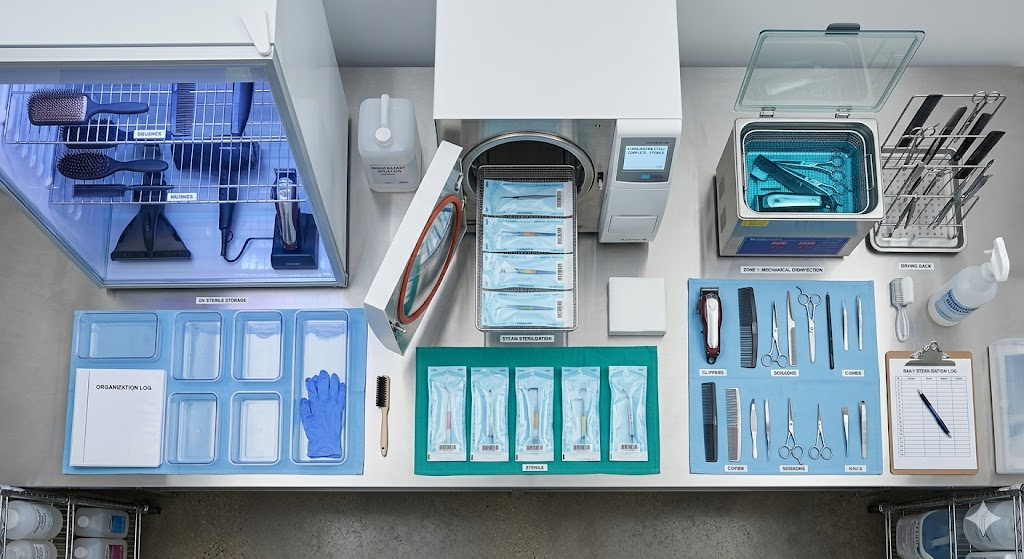
As a veteran groomer, I’ve refined these professional dog clipper disinfection methods into a quick, effective routine. Mastering this sequence ensures your tools stay sharp and your furry clients stay safe from irritation.
Thank you for reading this post, don't forget to subscribe!The Veteran’s 3-Step Disinfection Ritual
Step 1: The “Dry Clean” (Physical Debris Extraction)
Before any liquid touches the blade, you must clear the path. In my shop, the golden rule is: “Clean before you sanitize.”
- From the Grooming Table: I’ve seen many beginners spray disinfectant directly onto a hair-clogged blade. This creates a “muddy” paste of hair and oil that seeps into the motor and eventually seizes it. Use a stiff nylon brush to flick away every visible hair and dander flake from the teeth. A clean surface allows the disinfectant to actually reach the metal.
Step 2: The “Deep Dive” (Blade Wash Cleaning)
Surface wiping isn’t enough for true hygiene. To get into the nooks and crannies where bacteria hide, you need a Blade Wash.
- My Pro Tip: Pour your specialized cleaning solution into a shallow tray. With the clipper running, dip only the tip of the blade into the wash for about 10 seconds. You’ll see a cloud of hidden dirt and old, oxidized oil vibrate right out of the blade. It’s like a detox for your equipment! Pat it dry with a lint-free towel afterward.
Step 3: The “Quick Reset” (5-in-1 Cooling Sprays)
During long grooming sessions, friction turns your blades into hot irons. A 5-in-1 cooling spray is my secret weapon for mid-groom maintenance.
- The Technique: Hold the clipper 6 inches away and give it a quick blast. This instantly cools the metal, lubricates the movement, and sanitizes. Always wipe away the excess. You want the blade sanitized, but you don’t want the dog’s coat getting greasy from the spray residue.
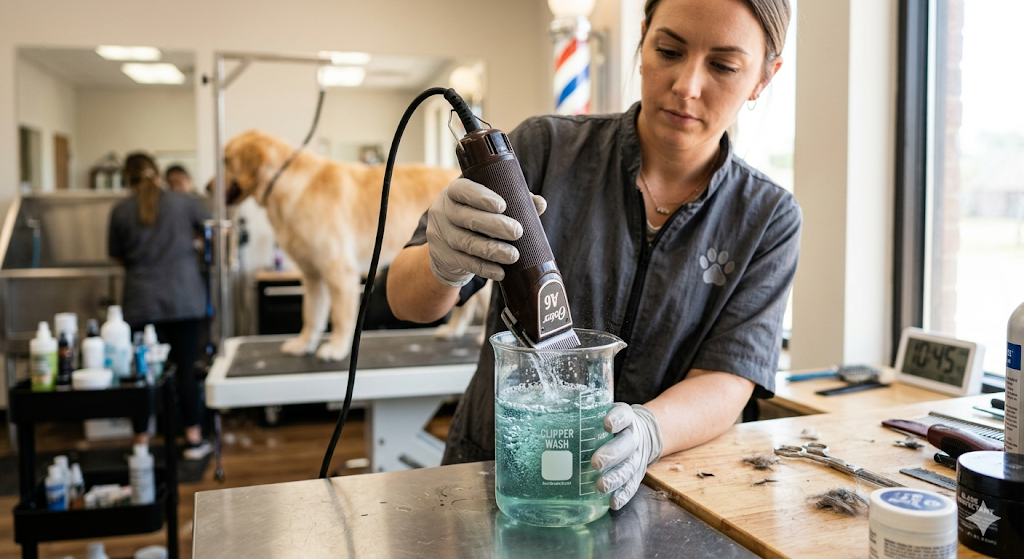
[Image: A professional groomer dipping a running clipper blade into a wash solution]
FAQ: Expert Answers for Professional Care
Q1. Can I use rubbing alcohol instead of specialized products?
A1. I strongly advise against it. While alcohol kills bacteria, it’s a “dry” solvent. It strips away all moisture, leading to friction heat and eventually rust. Professional products contain essential lubricants that keep the metal “happy” and sharp.
Q2. How often should I sanitize during a single groom?
A2. I make it a habit to touch the blade to my inner wrist every few minutes. If it feels warm to the touch, it’s time for a cooling spray. Constant sanitization prevents “clipper burn” and keeps the dog calm—a hot blade makes for a very wiggly, uncomfortable pup.
Q3. Is cleaning the same as disinfecting?
A3. Definitely not. Cleaning is about aesthetics (removing hair); disinfecting is about health. Professional disinfection kills microbes like pyoderma or ringworm that can easily hop from one dog to another in a salon environment.
Conclusion: Hygiene is the Mark of a Pro
Integrating these professional dog clipper disinfection methods into your daily routine is about more than just maintenance; it’s about providing a premium, safe experience. When a client sees you meticulously caring for your tools, they know their pet is in safe hands.
To keep your blades gliding even smoother after this routine, don’t forget to check out our companion guide on [How to Oil Dog Clipper Blades].
https://www.poocheshairstudio.com
Find more expert grooming tips at our [Poochestips Home]
Pooches Hair Studio Official Website: [poocheshairstudio]
"Healthy paws, happy dogs. Visit [Poochestips Home] for more comprehensive guides!"
Discover our top grooming product recommendations at [Pooches Choice]!
(As an Amazon Associate, I earn from qualifying purchases. This helps support our blog in providing valuable information for dog owners at no extra cost to you.)