
Pooches Tips — Blog Article
Navigating Spring’s Challenges: Expert Grooming for Spring Dog Hot Spot Prevention
Spring is a season of renewed energy, longer walks, and blooming flowers – a joyous time for our canine companions. However, for many dogs and their owners, it also signals the return of a frustrating and painful adversary: hot spots. As a professional dog groomer with years of experience, I’ve seen countless cases where a beautiful spring day turns into a battle against inflamed, itchy skin. In my salon, proactive Spring Dog Hot Spot Prevention is a top priority, and it’s something I’m passionate about sharing with every dog owner. This comprehensive guide will explore why hot spots emerge in spring and how professional grooming, combined with vigilant at-home care, can keep your dog’s skin healthy and happy all season long.
Understanding Hot Spots: Why Spring Poses a Unique Challenge
Over the years, I’ve come to understand that hot spots, medically known as acute moist dermatitis, aren’t just random occurrences; they’re often a symptom of underlying issues exacerbated by environmental factors. I remember a particularly active Golden Retriever named Buster, who’d come in every April with a new hot spot, usually on his flank. We eventually realized it was a perfect storm of his dense coat, his love for puddle jumping, and seasonal allergens. For Buster, Spring Dog Hot Spot Prevention became an annual mission.
The Environmental Factors: Humidity, Allergens, and Parasites
Spring brings a cascade of changes that can irritate a dog’s skin. Increased humidity creates a breeding ground for bacteria and yeast, especially in dense coats. This trapped moisture can quickly turn into a breeding ground for trouble. Pollen counts soar, triggering allergic reactions that manifest as itchiness.
And, of course, parasites like fleas and ticks become more active, with a single bite potentially initiating the hot spot cycle. I often see cases where a seemingly minor flea bite on an allergic dog quickly escalates into an angry, weeping hot spot, especially in warm, damp weather.
The Behavioral Link: Licking, Chewing, and Self-Trauma
It’s a classic scenario I see in the shop: an initial itch – perhaps from an insect bite or an allergen – leads to excessive licking, chewing, or scratching. This self-trauma further irritates the skin, breaking the skin barrier and trapping moisture. Once the skin is compromised, bacteria thrive, leading to a rapidly expanding, painful lesion. This cycle is particularly vicious in spring when dogs are spending more time outdoors and are more exposed to triggers.
I’ve often witnessed how quickly a tiny irritation can transform into a significant problem. For instance, a small scratch behind the ear, if repeatedly licked, can become a two-inch hot spot overnight. It’s a testament to how relentless dogs can be in trying to relieve an itch.
The Critical Role of Professional Grooming in Spring Dog Hot Spot Prevention
Professional grooming is not just about aesthetics; it’s a vital component of skin health management, especially for Spring Dog Hot Spot Prevention. Over the years, I’ve found that regular, tailored grooming sessions can prevent countless hot spot flare-ups. A well-maintained coat and clean skin are your dog’s first line of defense against spring’s challenges.
Shedding Services: Removing Dead Undercoat and Enhancing Airflow
One of the most effective tools in my arsenal for Spring Dog Hot Spot Prevention is a thorough deshedding treatment. When a client brings in a dog with a thick winter coat, matted with shedding fur, I know we’re on hot spot alert. That dense, dead undercoat traps moisture, dirt, and allergens against the skin, creating an ideal environment for hot spots to flourish.
I remember a Newfoundland named Bear who used to get terrible hot spots on his back every spring until his owners committed to regular deshedding. The improvement was dramatic. By removing that heavy, suffocating layer, we allow air to circulate, keeping the skin drier and healthier. This simple step can dramatically reduce the risk of irritation and infection.
Therapeutic Baths and Medicated Shampoos
For dogs with known skin sensitivities or allergies, a standard bath just won’t cut it. In my salon, I often recommend therapeutic baths using hypoallergenic or medicated shampoos. These specialized products can soothe irritated skin, reduce inflammation, and even treat minor bacterial or yeast infections before they escalate.
I’ve seen remarkable results with a little Cocker Spaniel, Daisy, who was prone to ear and neck hot spots. Her owner now brings her in for a weekly medicated bath during spring, and her skin issues have almost completely resolved. Finding the right shampoo, guided by your groomer or vet, can make all the difference in achieving effective Spring Dog Hot Spot Prevention.
Hygiene Clips and Sanitary Trims
Strategic trimming is absolutely essential, particularly for breeds with longer coats or dense fur around sensitive areas. This includes sanitary clips around the rear, trimming paw pads, and tidying up under the armpits and behind the ears. These areas are prone to trapping moisture and debris. I always tell owners, “We can’t prevent what we can’t see,” and a good sanitary trim helps me closely inspect the skin for any early signs of irritation or infection.
I recall a client with a fluffy Bichon Frise named Cotton. He consistently developed hot spots in his armpits until we started doing very short hygiene clips in that area every few weeks. Suddenly, the problem disappeared because the skin could finally breathe and stay dry.
Ear Cleaning and Nail Trimming: Indirect but Important Prevention
While not directly targeting hot spots on the body, ear cleaning and nail trimming play a significant indirect role. Unclean ears can lead to infections, causing dogs to shake their heads excessively, which can create friction and moisture around the neck and ears, leading to hot spots. Similarly, overgrown or sharp nails can cause dogs to scratch themselves, breaking the skin barrier and initiating a hot spot.
In my early years as a groomer, I learned this lesson with a Basset Hound named Droopy. His recurrent ear infections led to constant head shaking, causing hot spots on his neck. Once his ears were regularly cleaned, both the infections and the hot spots cleared up. Many clients whose dogs’ hot spots around the face and neck disappeared once we started regular ear cleaning and nail trims.
At-Home Vigilance: Your Role in Preventing Spring Hot Spots
While professional grooming lays a strong foundation, consistent at-home care is equally crucial. As your groomer, I empower clients with the knowledge and tools to be their dog’s first line of defense. Your daily interactions are vital for successful Spring Dog Hot Spot Prevention.
Daily Brushing and Skin Checks
A quick, daily brush isn’t just for shine; it’s an opportunity to perform a ‘pat-down’ and feel for any bumps, tenderness, or dampness on your dog’s skin. This routine allows for early detection, which is paramount. I’ve taught many owners how to part the fur and look for any redness or irritation, especially in the common hot spot areas.
I remember a feisty Terrier mix whose owner, thanks to these daily checks, caught a tiny red spot behind his ear before it could explode into a full-blown hot spot, saving him a trip to the vet. It was just a small area of matted fur that was starting to irritate the skin, and a quick trim and a little soothing spray were all it needed.
Managing Allergies and Flea Control
Identifying and managing your dog’s allergies is fundamental. If your dog suffers from environmental allergies, discuss strategies with your vet, which might include antihistamines, dietary changes, or other treatments. Furthermore, strict flea and tick control is non-negotiable. A single flea bite can trigger a cascade of itching and self-trauma, particularly in dogs with flea allergy dermatitis.
I’ve had countless conversations with owners who are diligent about flea prevention but sometimes forget to reapply treatments on time. Just a day or two late can be enough for a single flea to jump on, bite, and start a chain reaction. Regular, year-round parasite control is key to Spring Dog Hot Spot Prevention.
Proper Drying After Water Activities
Spring often means more outdoor adventures, including trips to the lake or beach. For water-loving breeds, proper drying after getting wet is critical. Simply towel drying the outer coat isn’t enough; moisture trapped deep within the undercoat can quickly lead to hot spots. This is especially true for thick-coated breeds.
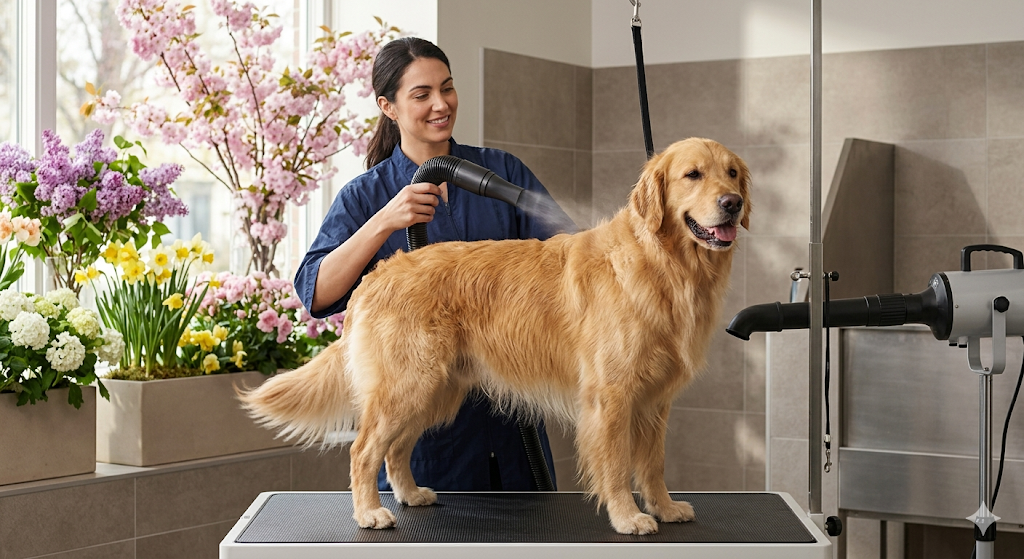
I always advise owners to use a high-velocity dog dryer on a cool setting or ensure a very thorough towel dry, lifting the fur to expose the skin, especially for breeds like Labradors or Golden Retrievers. I’ve seen numerous hot spots develop on the flanks of otherwise healthy dogs because their owners didn’t fully dry them after a swim, leaving their dense undercoat damp for hours.
When to Seek Professional Veterinary Help
As your groomer, my primary goal is prevention and early intervention, but there are clear limits to what I can do. Recognizing when a hot spot requires veterinary attention is a critical part of responsible pet ownership. Knowing when to escalate care is a vital part of Spring Dog Hot Spot Prevention.
Recognizing Advanced Stages of Hot Spots
If a hot spot is large, deeply infected, extremely painful to the touch, rapidly worsening, or doesn’t respond to mild at-home care within 24 hours, it’s time to see the vet. Signs of advanced infection include pus, a foul odor, and significant swelling. While I can offer comfort clips and apply soothing agents to help clear the area, truly infected hot spots often require prescription medication, such as antibiotics or anti-inflammatories, from a veterinarian.
I once had a frantic call from an owner whose dog developed a hot spot overnight that was oozing and very painful. I immediately advised them to go to the vet. It turned out to be a deep bacterial infection that needed prescription antibiotics, something no grooming product could fix.
The Importance of a Multi-faceted Approach
Effective hot spot management and Spring Dog Hot Spot Prevention often require a team effort. This means collaboration between you, your groomer, and your veterinarian. I frequently work with local vets, referring clients and ensuring we’re all aligned on the best course of action for the dog’s skin health. This integrated approach ensures that any underlying medical conditions are addressed, while grooming provides the crucial preventative and supportive care.
This collaborative approach recently saved a Shih Tzu named Muffin from recurring hot spots that stemmed from a combination of seasonal allergies, a dense coat, and an underlying yeast infection. With veterinary medication, regular deshedding, and a specialized shampoo regimen in my salon, Muffin finally found relief.
Conclusion
As we embrace the beauty of spring, let’s also embrace proactive care for our canine companions. Hot spots don’t have to be an inevitable part of the season. By understanding the triggers, embracing professional grooming services, and maintaining diligent at-home care, we can work together towards successful Spring Dog Hot Spot Prevention. As your trusted groomer, my goal is always to keep your dog comfortable, healthy, and happy. Don’t hesitate to reach out to discuss your dog’s specific needs and let’s make this spring hot spot-free!
https://www.poocheshairstudio.com
Find more expert grooming tips at our [Poochestips Home]
Pooches Hair Studio Official Website: [poocheshairstudio]
"Healthy paws, happy dogs. Visit [Poochestips Home] for more comprehensive guides!"
Discover our top grooming product recommendations at [Pooches Choice]!
(As an Amazon Associate, I earn from qualifying purchases. This helps support our blog in providing valuable information for dog owners at no extra cost to you.)