
Pooches Tips — Blog Article
The Groomer’s Guide to Spring Tick Grooming Tips: Identify, Remove, Prevent
Spring is a season of joy, warmer weather, and longer walks with our beloved canine companions. However, it also marks the peak season for an unwelcome guest: ticks. As a professional dog groomer with over two decades of experience, I’ve seen countless dogs come through my salon doors with these tiny parasites clinging on. It’s a critical time for vigilance. That’s why I’ve put together my essential spring tick grooming tips to help every pet parent navigate this challenging season confidently and keep their furry friends safe.
Thank you for reading this post, don't forget to subscribe!This comprehensive guide will walk you through everything from identifying ticks, to safely removing them, and most importantly, implementing robust prevention strategies through dedicated grooming practices. Trust me, a little proactive care goes a long way.
The Seasonal Threat: Why Spring Demands Vigilance
As the temperatures rise and nature awakens, so do ticks. They’re not just a nuisance; they pose serious health risks to dogs, transmitting diseases like Lyme disease, Anaplasmosis, and Rocky Mountain Spotted Fever. Understanding their habits is the first step in combating them effectively.
Understanding Tick Habitats and Life Cycles
In my salon, I’ve often seen clients surprised by where ticks can hide. Many assume ticks are only found in tall grasses or deep woods. While these are prime spots, ticks can also thrive in your backyard, lurking in leaf litter, shrubs, and even under decks. They wait patiently for a host, latching on as soon as they get the chance. Their life cycle, from larva to nymph to adult, often involves multiple hosts, making continuous vigilance crucial, especially in spring when nymphs (which are very tiny and hard to spot) are abundant. I remember a Poodle client, a city dog named Pippin, who picked up a tick just from a quick bathroom break in a manicured park! It taught me that no dog is truly safe without proper checks, regardless of their environment.
The Dangers Ticks Pose to Our Canine Companions
Beyond the discomfort and potential skin irritation, the real danger of ticks lies in the diseases they carry. A single bite can transmit pathogens that lead to severe health issues, often with delayed symptoms. Early detection and removal are paramount. Over the years, I’ve encountered cases where a tick-borne illness went undiagnosed for weeks, leading to much more intensive and expensive veterinary care. This is a common issue I see in the shop, emphasizing why prevention and prompt action are so critical for your dog’s long-term health. Therefore, understanding the risks truly underpins the value of diligent grooming.
My Essential Spring Tick Grooming Tips for Early Detection
Early detection is your best defense against ticks. Integrating thorough tick checks into your regular grooming routine can make all the difference, transforming a potential health crisis into a minor inconvenience. This is where my spring tick grooming tips truly begin.
The Art of the Thorough Grooming Check
When a client asks me for my top spring tick grooming tips, I always start with the “full body canvas check.” This isn’t just a quick pat-down. It’s a methodical, hands-on examination of your dog’s entire body. Start from the head, feeling behind and inside the ears (a favorite hiding spot!), around the muzzle, under the chin, and down the neck. Don’t forget the armpits, groin area, between the toes, and under the tail. Run your fingers against the grain of the fur, feeling for any small bumps. Ticks can be as tiny as a poppy seed or as large as a grape once engorged. I remember a Westie named Daisy who came in for her regular trim; I found a tiny deer tick tucked deep in her ear canal that her owner had completely missed. It was barely visible, but my practiced fingers felt the slight irregularity, highlighting the importance of thoroughness.
Grooming Tools That Aid in Tick Spotting
Certain tools can significantly improve your tick detection rate. Incorporating these into your routine makes the search much more efficient.
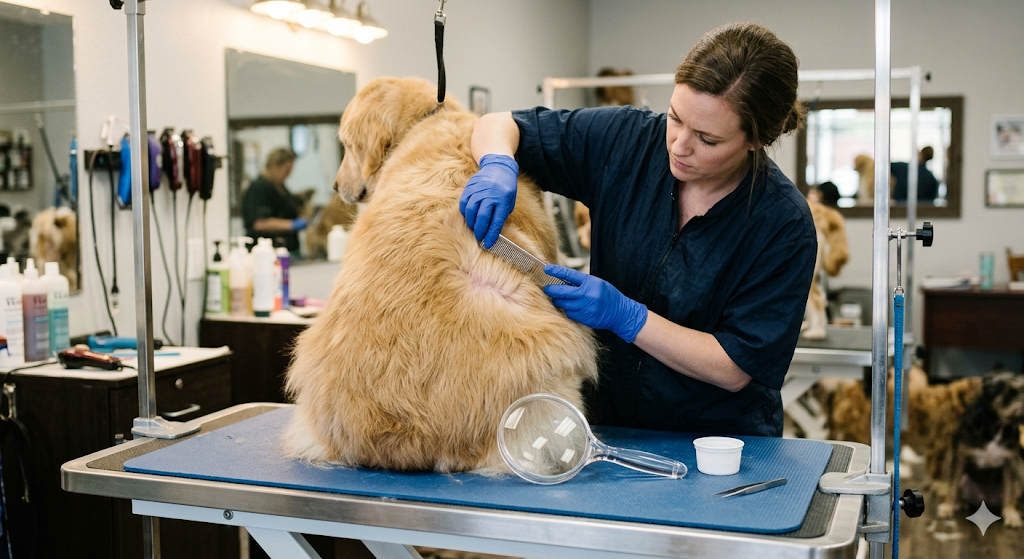
* Fine-toothed comb: This tool is especially useful for dogs with dense or long coats. It can help part the fur and even snag ticks before they have a chance to properly embed.
* Grooming gloves: Textured gloves can enhance your tactile sense, making it easier to feel tiny bumps that might otherwise go unnoticed. They also provide a barrier for your hands.
* Good lighting: Always perform your checks in a well-lit area. For darker areas of your dog’s body or for dogs with dark fur, use a flashlight to improve visibility.
* Magnifying glass: For those extra tiny nymphs that are almost invisible to the naked eye, a magnifying glass can be a game-changer. I keep one handy in my salon for just such occasions.
What a “Tick Bump” Really Feels Like
Often, clients confuse a skin tag, a small scab, or even a nipple with a tick. Based on my years of hands-on experience, a tick bump usually feels distinct. It’s a small, firm, raised bump that is firmly attached to the skin. You might feel the tick’s body, which can be round or oval, and it might feel like a tiny seed or a small bead embedded in the skin. If you gently part the fur, you might even see the tick’s legs or its grayish-brown body. Don’t confuse it with benign skin anomalies; when in doubt, assume it’s a tick and proceed with caution. This caution ensures timely and safe removal.
Safe & Stress-Free Tick Removal: A Groomer’s Step-by-Step Guide
Finding a tick can be alarming, but safe and effective removal is straightforward with the right tools and technique. Panic often leads to improper removal, which can leave parts of the tick embedded or even squeeze infectious fluids into your dog. Let’s tackle this confidently.
Essential Tools for Tick Extraction
Before you begin, gather your supplies. Having everything ready beforehand makes the process smoother and less stressful for both you and your dog. You’ll need:
* Fine-tipped tweezers or a specialized tick removal tool: These are specifically designed to grasp the tick close to the skin without squeezing its body, which is crucial for preventing disease transmission.
* Gloves: Wear gloves to protect yourself from potential pathogens that the tick might carry.
* Antiseptic wipe or rubbing alcohol: For cleaning the bite area afterward to prevent infection.
* Small container with rubbing alcohol: This is for safely disposing of the tick once it’s removed.
* A calm demeanor: This is paramount for both you and your dog! Your calm attitude will help keep your dog relaxed during the process.
The “Twist and Pull” Technique I Trust for Spring Tick Grooming
Over the years, I’ve refined a tick removal technique that minimizes stress and maximizes safety. This is one of the most crucial spring tick grooming tips I can offer to pet parents.
1. Prepare: Put on your gloves. Calmly reassure your dog with gentle strokes and a soothing voice.
2. Part the Fur: Gently part your dog’s fur around the tick to fully expose the skin and the tick’s attachment point.
3. Grasp Firmly: Using your fine-tipped tweezers or specialized tick removal tool, grasp the tick as close to the skin’s surface as possible. It is vital not to grasp the tick’s body, as this can squeeze harmful fluids into your dog.
4. Steady Pull & Twist: With even, upward pressure, slowly and steadily pull the tick straight out. Many tick removers advocate a slight twisting motion (clockwise or counter-clockwise) while pulling. Avoid jerking or twisting abruptly, as this can cause the tick’s mouthparts to break off and remain embedded in your dog’s skin.
5. Inspect: Check the removed tick to ensure it’s intact, especially its head and mouthparts. Also, carefully inspect the bite area on your dog to confirm no tick fragments remain.
6. Clean: Clean the bite area thoroughly with an antiseptic wipe or rubbing alcohol to disinfect the skin.
7. Dispose: Place the removed tick in the container of rubbing alcohol to kill it. You may want to save it in a sealed bag or jar with the date for a few days in case your dog shows signs of illness later; this can be helpful for your vet.
I remember a particularly stubborn tick on a Labrador’s eyelid. The owner, Sarah, was terrified of hurting him, understandably so for such a delicate area. With steady hands and the right tool, I gently twisted and pulled, and the tick came out clean without any fuss. It just goes to show that patience and precision are key, even in the most sensitive areas.
Post-Removal Care and What to Watch For
After removing a tick, keep a close eye on the bite area for a few days. Observing for any changes is an important part of comprehensive spring tick grooming tips.
* Mild redness or a small bump: This is normal and should subside quickly as the skin heals.
* Persistent swelling, oozing, or signs of infection: Contact your vet immediately if you notice these, as they could indicate a secondary infection.
* Signs of illness: Watch for lethargy, lameness, loss of appetite, fever, or changes in behavior in the weeks following a tick bite. These could indicate a tick-borne illness and warrant a prompt vet visit.
Prevention is Key: Long-Term Spring Tick Grooming Strategies
While prompt removal is important, preventing ticks from attaching in the first place is the ultimate goal. This involves a multi-faceted approach, including regular grooming, appropriate products, and environmental management. A proactive stance is always best.
Regular Brushing: Your First Line of Defense
This is perhaps one of the most underestimated spring tick grooming tips. Daily or every-other-day brushing, especially after walks outdoors, does more than just keep your dog’s coat looking good. It helps dislodge loose ticks that haven’t yet attached. Furthermore, it gives you an excellent opportunity for a quick visual and tactile check of their entire body. I often tell my clients, “Think of brushing as your daily tick patrol!” I had a long-haired Bernese Mountain Dog, Bear, whose owner was diligent with daily brushing. She’d frequently find unattached ticks simply caught in his brush, preventing them from ever getting a chance to bite. It’s a simple habit that offers significant protection.
The Power of Medicated Shampoos and Dips
For dogs at high risk or those living in heavily infested areas, medicated shampoos or dips can be a valuable part of your grooming routine.
* Tick-repellent shampoos: While not long-lasting, these products can kill ticks on contact and provide temporary protection immediately after a bath. They are excellent for an initial cleanse.
* Dips: These are stronger chemical solutions that remain on the coat for a longer period, offering extended protection against ticks. Always consult your veterinarian before using dips, as they can be potent and require careful application. I only ever recommend them under vet supervision and typically apply them in a professional setting where ventilation is good and I can monitor the dog closely for any adverse reactions.
Environmental Management: Grooming Beyond the Dog
Your dog’s environment plays a huge role in tick exposure. Effective spring tick grooming tips extend to your surroundings.
* Maintain your yard: Keep grass mowed short, trim shrubs, and clear leaf litter, especially around frequently used areas where your dog plays. Ticks thrive in overgrown spaces.
* Create barriers: Consider a wood chip or gravel barrier between wooded areas and your lawn. This can deter ticks from migrating into your dog’s play space.
* Check yourself: Ticks can hitch a ride on you too! Always do a thorough self-check after being outdoors, especially after walks in tick-prone areas, to avoid bringing them indoors.
When to Consult Your Veterinarian About Prevention
While grooming is vital, it’s part of a larger prevention strategy. For comprehensive protection, always involve your vet.
* Topical preventatives: Spot-on treatments applied monthly or every few months offer consistent protection by repelling or killing ticks.
* Oral medications: Chewable tablets that provide month-long protection are very popular and effective.
* Tick collars: Some collars contain active ingredients that repel or kill ticks for several months.
* Vaccinations: The Lyme disease vaccine is available in some areas and can provide an extra layer of defense against one common tick-borne illness.
In my opinion, the best spring tick grooming tips always include professional veterinary advice. Your vet can assess your dog’s lifestyle, geographic location, and individual health to recommend the most effective and safest tick prevention products. I always encourage clients to discuss these options during their annual check-ups, ensuring a tailored approach.
My Salon’s Approach to Year-Round Tick Awareness
At my salon, ‘Pooches Tips,’ tick awareness isn’t just a seasonal concern; it’s a year-round commitment. We see a spike in spring, but ticks can be active even in mild winter climates. Therefore, our vigilance never truly wanes.
Educating Pet Parents on Home Practices
A huge part of my job as a groomer is educating pet parents. I firmly believe that an informed owner is a dog’s best advocate. During every spring grooming appointment, I make it a point to discuss the importance of daily tick checks, demonstrate proper removal techniques, and provide resources for identifying local tick risks. I remember a new puppy owner, Sarah, who was overwhelmed with all the information. I spent extra time showing her exactly where to check on her tiny Chihuahua mix, giving her confidence and empowering her with practical skills she could use every day. These hands-on lessons are invaluable for long-term pet health.
Staying Updated on Local Tick Activity
Tick populations and the prevalence of tick-borne diseases can vary greatly by region and even change year to year. I make it a point to stay updated on local tick activity reports from veterinary associations and public health organizations. This allows me to provide the most relevant and current advice to my clients, helping them tailor their prevention strategies effectively based on real-time data for our specific area. This local knowledge is a critical component of truly effective spring tick grooming tips.
Conclusion
Spring is a beautiful time, but it also brings the heightened risk of ticks. By incorporating these spring tick grooming tips into your routine, you’re not just grooming your dog; you’re actively protecting their health and well-being. From meticulous checks to safe removal and proactive prevention, your dedication makes all the difference. As a professional groomer, I’ve seen firsthand the benefits of a vigilant approach. So grab your comb, get hands-on, and let’s make this a tick-free spring for our beloved companions!
📦 SEO Package
FOCUS_KEYWORD: spring tick grooming tips
EXCERPT: Discover essential spring tick grooming tips from a professional groomer to identify, safely remove, and prevent ticks this season.
SEO_TITLE: 7 Amazing Spring Tick Grooming Tips
SLUG: spring-tick-grooming-tips
CATEGORY: Grooming Tips
TAGS: dog ticks, tick prevention, dog grooming, spring pet care, tick removal
THUMB_1_PROMPT: A professional dog groomer meticulously checking a dog’s fur for ticks in a well-lit grooming salon. The groomer is wearing blue gloves and holding a fine-toothed comb, looking closely at the dog’s coat. A magnifying glass is on the grooming table.
https://www.poocheshairstudio.com
Find more expert grooming tips at our [Poochestips Home]
Pooches Hair Studio Official Website: [poocheshairstudio]
"Healthy paws, happy dogs. Visit [Poochestips Home] for more comprehensive guides!"
Discover our top grooming product recommendations at [Pooches Choice]!
(As an Amazon Associate, I earn from qualifying purchases. This helps support our blog in providing valuable information for dog owners at no extra cost to you.)