
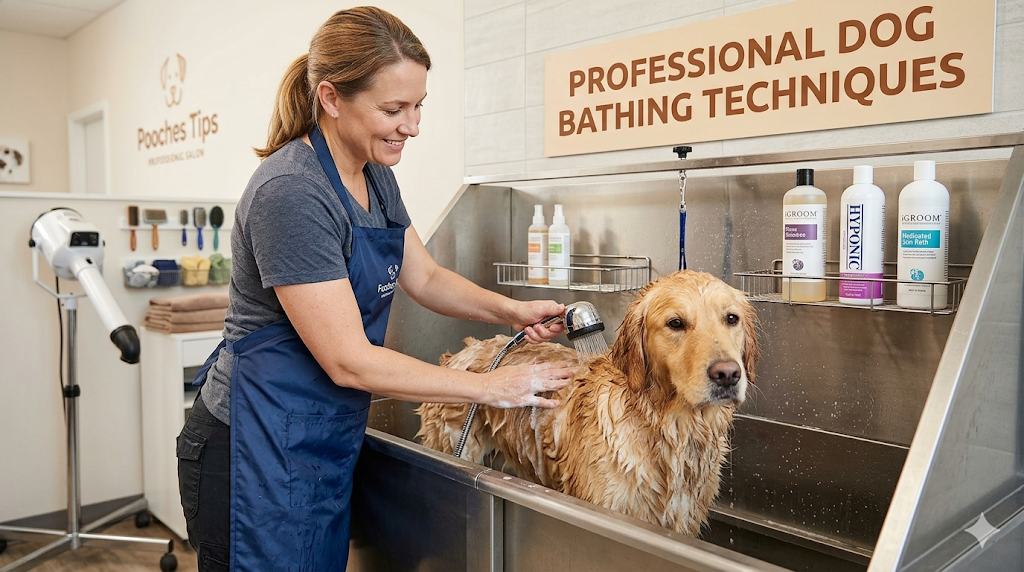
7 Proven Professional Dog Bathing Techniques for Your At-Home Grooming Routine
Professional dog bathing techniques are essential for maintaining your furry friend’s hygiene and dermatological health. Many pet parents make the honest mistake of treating canine skin exactly like human skin. However, after years of running Pooches Hair Studio, I can confidently tell you this is a massive error. Specifically, improper bathing is the absolute fastest way to trigger severe irritation and chronic skin issues. Therefore, mastering the right methods—from understanding pH levels to specialized rinsing—is crucial. By adopting these methods, you can achieve stunning salon-quality results while ensuring your dog feels completely safe. Consequently, this guide will revolutionize your entire at-home grooming routine.
Thank you for reading this post, don't forget to subscribe!Understanding Canine Skin: Why pH Balance is Crucial
The most critical step in applying professional dog bathing techniques actually begins before you turn on the faucet. First, you must deeply understand the unique biology of a dog’s skin. While human skin is naturally acidic with a pH of roughly 5.5, canine skin is vastly different. Specifically, a dog’s skin is much closer to neutral or slightly alkaline, typically ranging from pH 7.3 to 7.5.
The Science of pH 7.5: Stop Using Human Shampoo
Because of this unique alkaline nature, canine skin is incredibly susceptible to dangerous bacteria. If the natural acid mantle is disrupted, severe fungal growth can easily occur. Consequently, using human shampoos—even supposedly “gentle” baby formulas—will brutally strip away this protective layer. In my salon, I frequently see dogs suffering from extreme dryness, redness, and infections caused by human shampoo. Therefore, you must completely banish human hair products from your dog’s bath routine.
Pooches Hair Studio Preferred Shampoos
In the professional grooming world, we strictly prioritize products that respect this delicate chemical balance. At Pooches Hair Studio, we exclusively use premium, professional-grade formulas. Specifically, brands like iGroom or Hyponic are engineered perfectly for that specific pH 7.5 sweet spot. Furthermore, remember that excessively frequent bathing can actually be highly counterproductive. For most standard breeds, a thorough bath 3 to 4 times a month is the professional baseline. Ultimately, this frequency maintains optimal health without aggressively over-stripping their vital natural oils.
The Essential Pre-Bath Prep Strategy
Before a single drop of water ever touches your dog, a vital preparatory step must occur. Specifically, the thorough pre-bath brush-out is the absolute foundation of all professional dog bathing techniques. Unfortunately, many well-meaning owners skip this critical step completely. Consequently, they find their dog’s coat has turned into a rock-hard, felted mess once fully dried.
Why Brushing Before the Bath is Mandatory
Water essentially acts like superglue for existing tangles. Once a small knot gets wet and then aggressively dried, it tightens significantly. Therefore, this often requires the matted hair to be shaved off entirely to avoid causing the dog immense pain. Just last week, a severely matted Doodle came into my salon. Because the owner bathed him at home without brushing first, we had to perform a full surgical shave-down. Therefore, you must thoroughly detangle the dry coat first.
Tools We Trust at Pooches Hair Studio
To achieve a flawless, professional finish, you absolutely need the right kit. I always highly recommend investing in a firm slicker brush and a high-quality stainless steel greyhound comb. You must visually ensure that you can easily run a comb from the skin down to the hair tips. If the comb catches anywhere, that is a solid “mat” that needs working out. In addition, using a premium detangling spray helps lubricate the hair shafts smoothly. By physically removing dead undercoat now, you allow the shampoo to actually reach the skin directly.
Low-Stress Professional Dog Bathing Techniques
The specific way you introduce water can permanently determine your dog’s attitude toward grooming. Sadly, many dogs spend years trying to hide under the sofa at the mere sound of the word “bath.” Therefore, our professional dog bathing techniques strongly emphasize a low-sensory, high-comfort approach. Ultimately, this specific method keeps the dog’s stress-inducing cortisol levels incredibly low.
The “No-Sound” Shower Technique We Use Daily
Most dogs are not actually afraid of the water itself. Instead, they are completely terrified of the loud, highly pressurized “hissing” sound of the showerhead. To cleverly mitigate this fear, I developed a simple trick at Pooches Hair Studio. Keep the showerhead nozzle pressed directly and firmly against the dog’s body. Consequently, this brilliant “no-sound” technique allows the water to soak deeply through the coat. Furthermore, it completely eliminates the scary noise and the chaotic splashing sensation.
Always start slowly from the rear legs and calmly move forward. In addition, you must strictly use lukewarm water (around 37-38°C). By the time you finally reach the shoulders, the dog has usually fully acclimated to the temperature. If they remain perfectly calm, offer generous verbal praise or a tiny, high-value treat. However, remember that scolding a fearful dog simply validates their intense anxiety.
Safely Washing the Face and Eyes
The canine face is undeniably the most sensitive area of the entire body. To safely prevent water from entering the deep ear canals, you can carefully place large cotton balls inside. This prevents moisture buildup, which can quickly lead to painful yeast infections. However, you must be extremely cautious during this step. If a cotton ball is accidentally pushed too deep, it rapidly becomes a serious medical hazard.
Instead of aggressively spraying the face directly, utilize a soft washcloth. Gently wipe the delicate muzzle and carefully clean under the eyes. If you absolutely must use a sprayer near the head, turn the water pressure down to a tiny trickle. In addition, tightly cup your free hand over the dog’s eyes and nose. This creates a solid physical shield against rogue water droplets.
The Art of Professional Rinsing and Medicated Solutions
The stark difference between a basic “home-washed” dog and a premium salon-quality finish often comes down to the rinse. Even a microscopically tiny amount of leftover soap residue can cause severe “shampoo itch.” Consequently, this trapped residue leads directly to painful hotspots and massive skin irritation. Therefore, strict professional dog bathing techniques dictate that you must rinse continuously until the water runs completely crystal clear.
When to Use Medicated Baths for Skin Conditions
For dogs currently suffering from existing skin conditions, a standard shampoo is simply not enough. As a professional, I frequently reach for advanced medicated baths or highly hypoallergenic lines like Hyponic. For instance, if your dog suffers from chronic yeast overgrowth, a medicated shampoo must remain on the skin for 5 to 10 full minutes. This specific “contact time” allows the active medical ingredients to deeply penetrate the compromised skin barrier.
The Drying Game: Preventing Post-Bath Matting
The critical drying phase is exactly where the styling magic—or the absolute disaster—happens. If you lazily let a long-haired dog naturally air-dry, the moisture remains tightly trapped in the dense undercoat. Consequently, this leads to a pungent “wet dog smell” and severe, tight matting. Mastering professional dog bathing techniques means physically seeing the bath completely through until the skin is absolutely bone-dry.
High-Velocity Drying vs. Home Blow Dryers
In a professional salon setting, we exclusively utilize powerful high-velocity (HV) dryers. These machines do not rely on dangerous high heat. Instead, they utilize a highly focused blast of room-temperature air to literally “strip” the water off the hair shaft. Furthermore, they aggressively blow out the shedding dead undercoat. If you are forced to use a standard home hair dryer, you must never use the high heat setting. Canine skin physically burns much more easily and rapidly than human skin.
Real-World Case Study: Saving a Matted Schnauzer
Let me share a quick story from our salon. A lovely Miniature Schnauzer named Buster came to Pooches Hair Studio completely terrified of loud dryers. His owner had accidentally burned him with a human blow dryer at home. Therefore, we heavily modified our approach. I kept the HV dryer nozzle moving constantly while simultaneously using a slicker brush to “fluff” the coat. This crucial motion prevents the wet hair from tightly curling and tangling as it slowly dries. Because we took it incredibly slow and focused on his body before his sensitive head, Buster finally relaxed. Today, he actually falls asleep during the drying process!
Comparison: Home Bathing vs. Professional Salon Results
| Feature | Standard Home Bath | Professional Grooming Technique |
| Water Temperature | Often too hot or too cold | Strictly controlled Lukewarm (37-38°C) |
| Shampoo Quality | Cheap grocery brand (Acidic pH) | Premium pH-balanced formula (pH 7.5) |
| Ear Protection | Completely ignored | Manual shielding and careful cotton barriers |
| Drying Method | Lazy air-dry or rough towel rub | High-velocity “Fluff” drying to the skin |
| Skin Health Result | High potential for severe irritation | Targeted, soothing medicated treatments |
Frequently Asked Questions (FAQ) on Dog Bathing
Q: Exactly how often should I professionally bathe my dog? A: For most standard breeds, 3 to 4 times a month is absolutely ideal. Over-bathing can aggressively strip necessary natural oils. Conversely, under-bathing can easily lead to severe bacterial skin infections.
Q: Can I safely use human shampoo in an emergency situation? A: It is strictly not recommended. Human shampoo is far too acidic (pH 5.5) for a dog’s naturally alkaline skin (pH 7.5). Consequently, this will cause massive “Acid Mantle” damage.
Q: What is the absolute best way to dry a wet puppy? A: Always start with a highly absorbent microfiber sports towel to gently squeeze out 70% of the surface moisture. Then, use a professional blow dryer strictly on a “cool” setting while constantly brushing to finish.
Q: My rescue dog completely hates the showerhead. What can I do? A: You must utilize the “no-sound” technique. Simply place the running showerhead directly against their wet fur. This instantly eliminates the scary, hissing spraying noise that triggers their profound anxiety.
https://www.poocheshairstudio.com
Find more expert grooming tips at our [Poochestips Home]
Pooches Hair Studio Official Website: [poocheshairstudio]
"Healthy paws, happy dogs. Visit [Poochestips Home] for more comprehensive guides!"
Discover our top grooming product recommendations at [Pooches Choice]!
(As an Amazon Associate, I earn from qualifying purchases. This helps support our blog in providing valuable information for dog owners at no extra cost to you.)